
State College Borough Previous Residents by Era
Previous residents research changes as the date moves backward. Modern assessment material supplies a parcel key and a current tax-record starting point. Recorder documents follow ownership and transfers. The Pennsylvania Room holds the local tax, estate, road, obituary, and marriage material that fills the earlier stretches, while Penn State maps can place a building in time. The table keeps the sources in their own lanes, so a property record is not presented as proof of every past household.
| Source | Years it covers | Where held | What it shows |
|---|---|---|---|
| Recorder public documents | 1800-present at office | Recorder of Deeds, paid WEBIA remotely | Deed and mortgage parties, dates, book or page, property chain |
| PA Room tax assessment records | 1801-1965 | Pennsylvania Room, onsite | Assessment-era ownership and property context |
| PA Room road petitions | 1800-1956 | Pennsylvania Room, onsite | Road and route context for older address forms |
| PA Room estate files | 1800-1990 | Pennsylvania Room and digitized project | Estate, death, executor, and heir leads |
| PA Room obituary index | 1821-2021 | Primarily PA Room computers | Death notices and obituary leads |
| State College Sanborn maps | 1906, 1911, 1922, 1929 | Penn State searchable project | Building footprint, use, material, and address context |
| Federal census | Released records on the statutory 72-year schedule | National Archives, Census, or PA Room databases | Dated household snapshot |
Use the source that fits the era in question. When a remote index stops, the Recorder counter, the PA Room collection, and staff research service are documented alternatives rather than dead ends.
Trace State College Borough Previous Deeds
The backward deed trail begins with a modern parcel, not with a name alone. From the current assessment record, retain the UPI, legal description, situs address, and owner-of-record context. Locate that person's acquisition deed, then record the seller, deed date, recording date, document number or book and page, and any earlier reference. Search that seller as a prior grantee, checking the property description or UPI at each turn. This method traces a chain of title, which is the sequence of property transfers.
- Get the current parcel key and legal description through Centre County Tax Assessment, using DataScout or the public lobby terminal.
- Find the acquisition deed under the recorded party and date, then copy its property reference and grantor or grantee roles.
- Use the seller from that deed as a prior grantee to identify the earlier acquisition document.
- Repeat the comparison of UPI, legal description, lot, block, or prior book and page reference before accepting another link.
- When the online trail no longer answers the question, inspect Recorder books and indexes at the counter or use the Pennsylvania Room's trained WebIA access.
- Grantor
- The party transferring an interest in a deed.
- Grantee
- The party receiving an interest in that recorded document.
- Chain of title
- The dated sequence of transfer documents for a parcel, not a list of every former resident.
- Legal description
- The deed's land description, which can persist when a street address changes.
- UPI
- The Assessment-issued parcel identifier that connects Centre County assessment and deed records.
Distinguish a document party, a tax owner, and a physical occupant at every step. A correspondence field may be outside State College Borough and should not be converted into a claim that someone lived at the parcel.
State College Borough Previous Document Access
Centre County's Recorder of Deeds is the durable source for a property transfer trail. The office says public document records from 1800 forward, excluding military discharges, can be inspected there. Remote WEBIA is paid subscription access, and the county has not published an online starting-year guarantee. That contrast is important for previous residents research because the missing online result may only mean the next search belongs at the office.
The Recorder is at 414 Holmes Street, Suite 1, Bellefonte, open weekdays from 8:30 a.m. to 5 p.m. The published FAQ says counter deed prints are $0.50 per page. A mail request uses a self-addressed stamped envelope and a check after calling the office for the page total.
Use the Centre County Recorder of Deeds for the official office and inspection route.
Note: Preserve both the deed date and recording date, because they describe different points in a property transfer.
State College Borough Previous Residents Maps
For years before a modern number is reliable, the State College Sanborn maps provide a direct local bridge. Penn State's searchable project covers 1906, 1911, 1922, and 1929. Search an address, building name, or land-use code, then compare the building footprint and attributes with an old tax entry, legal description, or Recorder document. The map can place a structure in physical context; it does not identify every person who lived there.
Open the searchable State College maps to begin an address comparison.
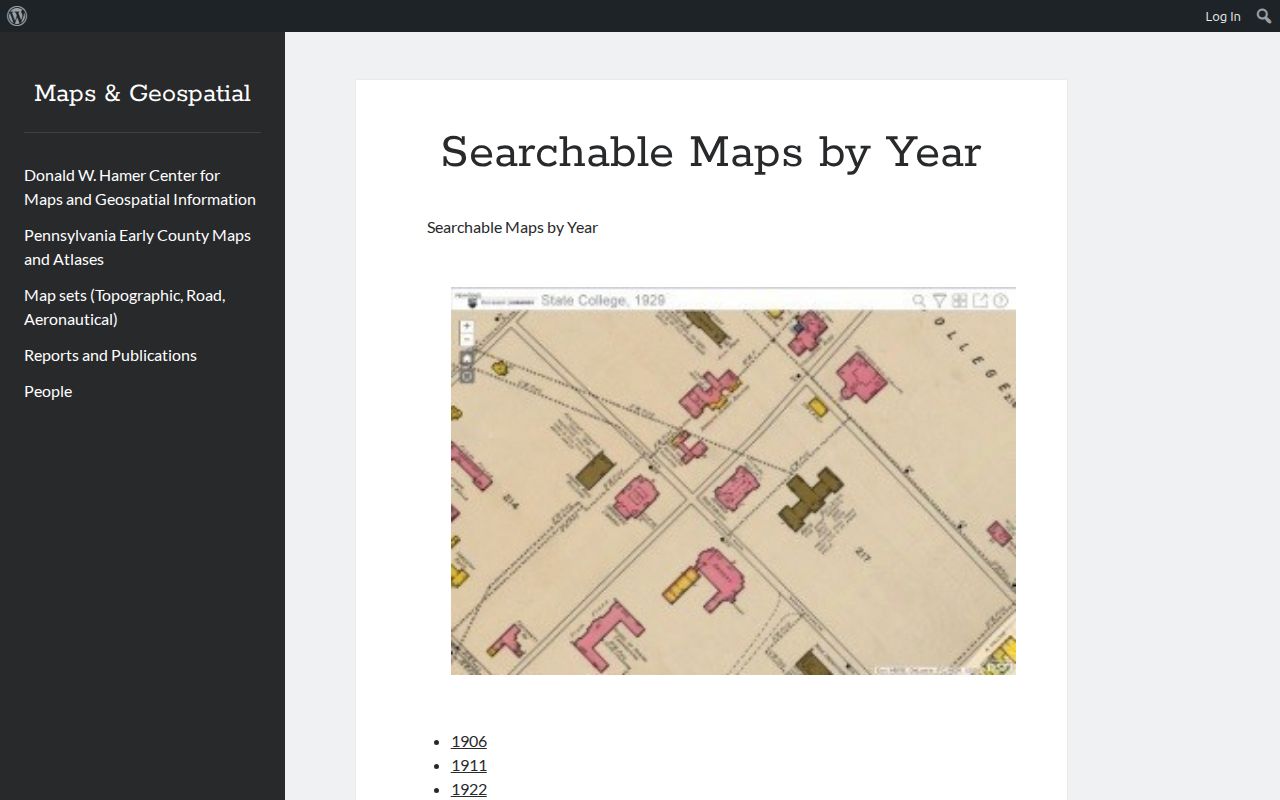
Choose the historical map year first, then compare the building record with the time window from the deed or tax evidence.
Read the Penn State State College Sanborn-map project for the series and its building-data work.
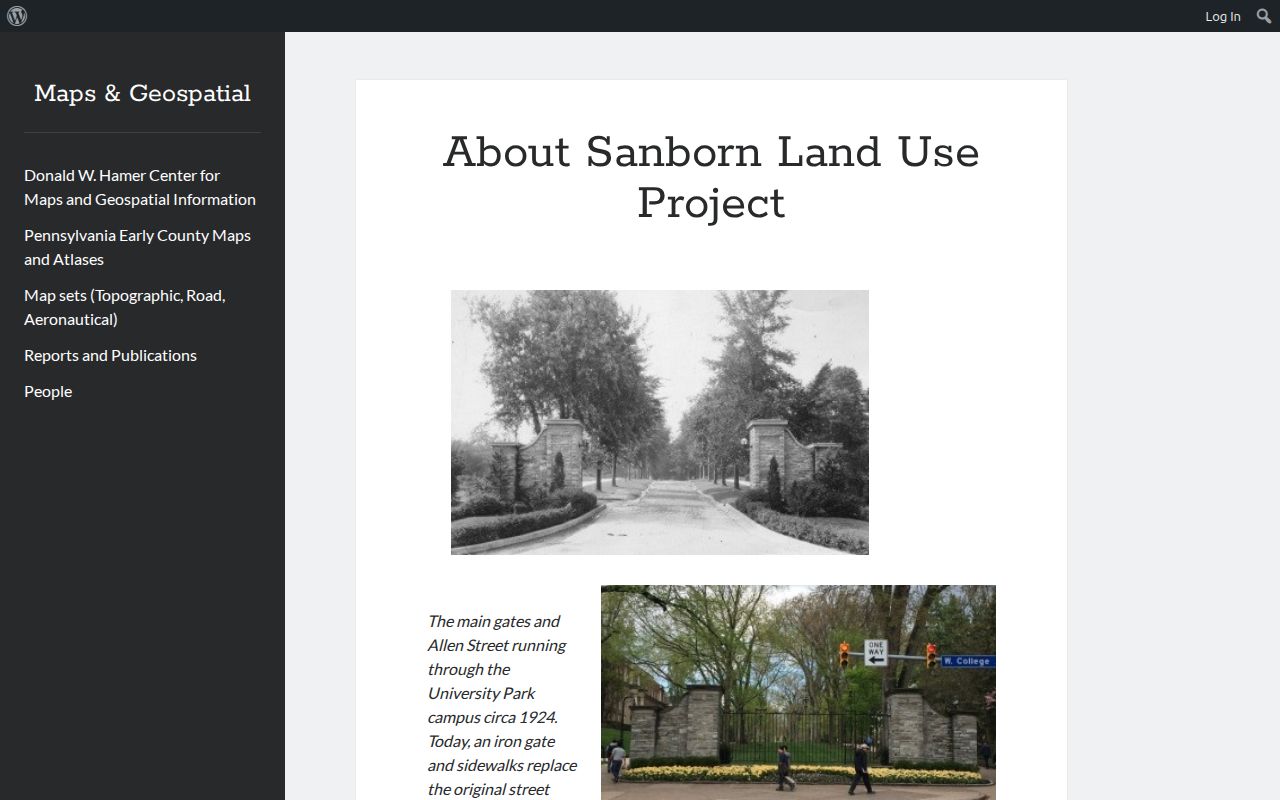
Penn State reports manual extraction for about 4,000 buildings, so this is a valuable State College Borough physical-history layer when paired with dated records.
State College Borough Previous Residents Numbers
The Pennsylvania Room at the Centre County Library & Historical Museum is the local historical-records anchor. Its noncirculating collection includes about 3,500 state, local, and family-history volumes, original county records, newspapers, manuscript genealogies, and indexes. It also maintains computerized local indexes for death notices and obituaries from 1821 to 2021, marriage records from 1764 to 2005, births and deaths from 1893 to 1905, cemetery material, and probate or estate files.
The scale has a practical payoff for a difficult address trail. The Spangler Collection includes 250,000 manually searched surname cards and tombstone inscriptions for 113 Centre County cemeteries. Those collections can help close a name or event question after the property documents have created a reliable time range. They do not turn an individual entry into a present-day location claim.
The Pennsylvania Room collection lists the onsite historical resources. Its research service can review a targeted request for an address, alternate street name, date range, and person; the initial review is free before staff quotes deeper research.
State College Borough Previous Residents Timeline
After a deed confirms a property transition, household-level sources can test who lived there during the interval. First locate a verified historical directory, telephone book, yearbook, or local publication through the PA Room catalog or onsite inventory. Record its actual publisher, edition year, and whether it includes a reverse section before treating it as an address source. Then preserve the printed spelling and any abbreviation rather than silently converting it to a modern form.
Pair the publication year with released federal census material and with tax or deed evidence. Penn State has already linked 1920 and 1930 census data to its 1922 and 1929 Sanborn basemaps at household scale. This gives State College Borough previous residents research a local way to compare a dated household snapshot with a structure's mapped setting.
- Normalize the historic address with the Sanborn map, road-petition context, and legal description where available.
- Locate a confirmed local directory or related publication and transcribe the entry exactly, including the edition and its stated place coverage.
- Compare the entry's date with the parcel's tax or deed chronology and the appropriate released census year.
- Use the obituary index, estate files, newspaper notices, or cemetery series to test a change in the trail.
The collections themselves, including what a directory line can and cannot establish, are described in the State College Borough Directory Book.
State College Borough Previous Estate Clues
Estate and obituary evidence can explain why a title changed or point toward a family relationship worth checking in the primary file. Centre County's Register of Wills and Clerk of Orphans' Court handles estates, wills, marriage records, guardianships, and confidential adoption filings. Estate records can identify an executor or heir lead, but they do not prove that every named family member lived at the property. Protected adoption material is not part of a public previous residents search.
See the Centre County Register of Wills and Clerk of Orphans' Court for its official probate and marriage-record scope.
The office route complements the PA Room's estate-file holdings, especially when the document trail reaches a known death or administration event.
For historical births and deaths, use the Pennsylvania vital-records genealogy route to understand the state index and archive path.
State Archives historical birth and death copies follow their own access rules, so a genealogy index lead still needs the right custodian and evidence.
State College Borough Previous Address Clue
Centre County's road-naming policy says existing surname-like street names may remain when they predate centralized addressing in 1999. That is a real warning for past residents searches. Older deed, tax, road-petition, or map descriptions may use a route, road, lot, or a variant that does not line up cleanly with a current delivery number.
Do not invent a borough-wide renumbering event. The research did not identify one. Instead, compare the old wording against the legal description, UPI, road-petition range, and searchable map evidence. The County 9-1-1 addressing process controls new address assignments, while State College Borough Public Works can address questions about correct number display.
A State College Borough 1890 Story
Most original 1890 federal census schedules were destroyed by fire and water. Centre County preserved a different lead from that period: a business and post-office directory compiled before the loss. The Pennsylvania Room's reprint is alphabetized by township and borough heads of household and includes a surname index. It reports 43,190 county residents and 2,800 family names.
That county-wide directory is not a complete State College Borough address roster. Its value is more specific: it can provide a documented alternative when the expected 1890 federal census evidence is unavailable. Pair any entry with property, map, estate, newspaper, or later census material before extending a past-resident conclusion.
Note: An absence from surviving 1890 federal material does not establish that a person was absent from Centre County.
State College Borough Previous Residents Limits
Previous residents records need a firm boundary. A deed follows ownership and document parties. A tax record follows assessment. A map follows a building or parcel. A directory or census entry is dated evidence whose coverage, spelling, and household details depend on that source. None should be stretched into a claim about a living person's present location. Pennsylvania's Address Confidentiality Program may substitute a protected address in some government records.
Record the document title, custodian, date, UPI or legal-description match, and any uncertainty. Those details make a previous residents result repeatable without overselling what the sources can show.