
State College City Directory Collections
There is no verified online catalogue that publishes a complete State College city-directory list, its publishers, or every edition year. That is a meaningful limit, not a reason to fill in plausible-looking years. Start with the Pennsylvania Room catalogue and onsite inventory, then record the actual title, edition, coverage, and whether a street or reverse section exists. The table separates confirmed local evidence from companion collections that help interpret a city directory result.
| Collection | Years | Where Held | Access |
|---|---|---|---|
| State College city-directory holdings | Catalogue check required | Pennsylvania Room and its onsite inventory | Catalogued discovery, then onsite consultation |
| Anderson's Directory and Reference Guide sample | 1911-12 | Penn State research page quoting the volume | Online evidence of a local multi-town example |
| Centre County business and post-office reconstruction | 1890 | Pennsylvania Room publication | Printed local-history substitute, surname indexed |
| Tax, estate, and notice indexes | 1800s-2021, by record type | Pennsylvania Room | Onsite records, databases, and research service |
The Pennsylvania Room is part of the Centre County Library & Historical Museum at 203 N. Allegheny Street in Bellefonte. It describes roughly 3,500 state, local, and family-history volumes, original county records, newspapers, manuscript genealogies, and indexes. Those materials are noncirculating and used onsite. Its research-request service begins with a no-cost preliminary review and may become paid when deeper work is warranted.
Note: A catalogue result establishes that a volume can be checked, not that it contains a complete household or a present address.
State College City Directory Research Desk
The Pennsylvania Room collection is the central local route when an old State College name or address does not appear in a general web search. Its computerized indexes include death notices and obituaries from 1821 to 2021, a marriage index from 1764 to 2005, birth and death indexes for 1893 to 1905, cemetery material, and probate or estate files. County newspapers begin in 1821. Obituaries and marriage announcements are indexed, while much other newspaper content still requires manual run and page work.
The collection also supplies onsite Ancestry Library Edition, FamilySearch Affiliate access, Newspapers.com access, maps, atlases, and original Centre County material. Trained library users can access WebIA there because each use carries a library cost. A distant researcher can begin through the research-services request, specifying the surname, the known address form, and a narrow date range rather than asking for a new resident list.
The Pennsylvania Room collection page shows the local-history setting used for this State College city directory route.
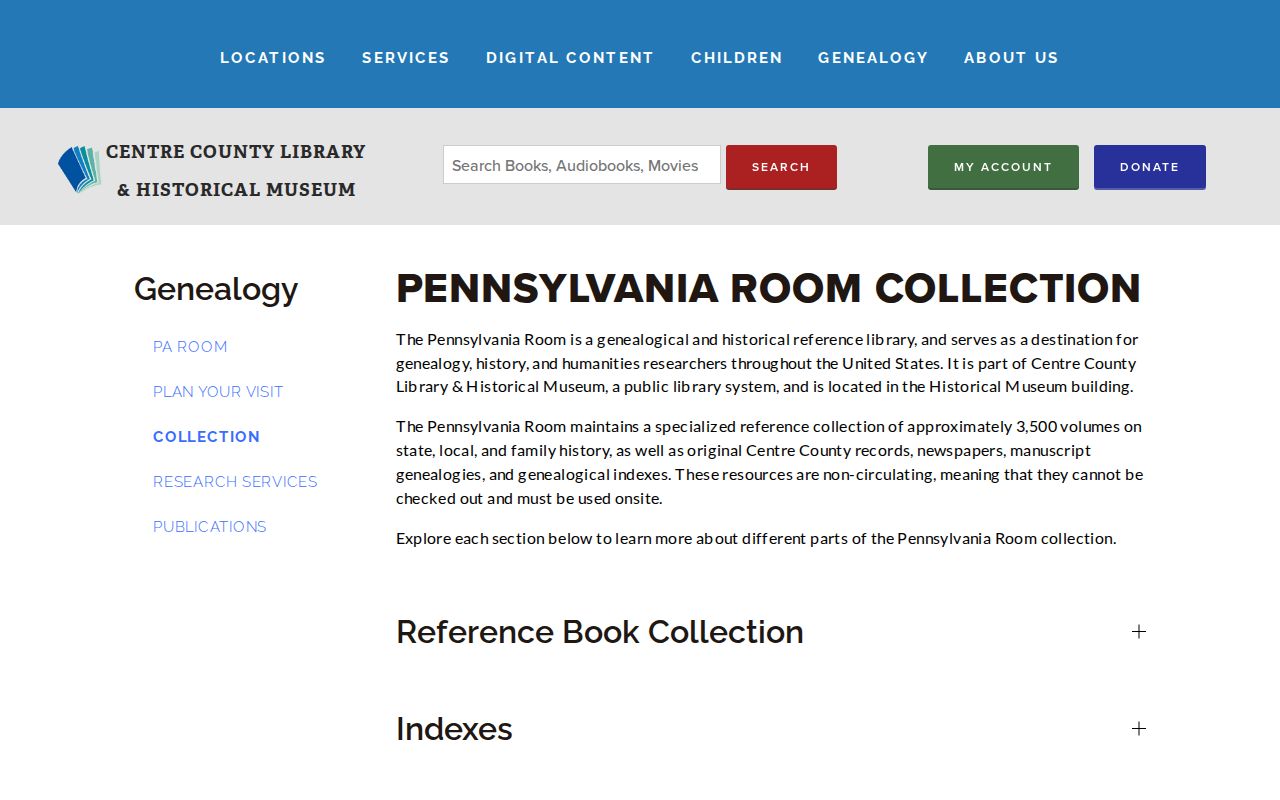
The collection is strongest when a directory line is treated as one dated source among many, rather than a stand-alone answer.
The Pennsylvania Room research-services page describes the request path for a more focused local search.
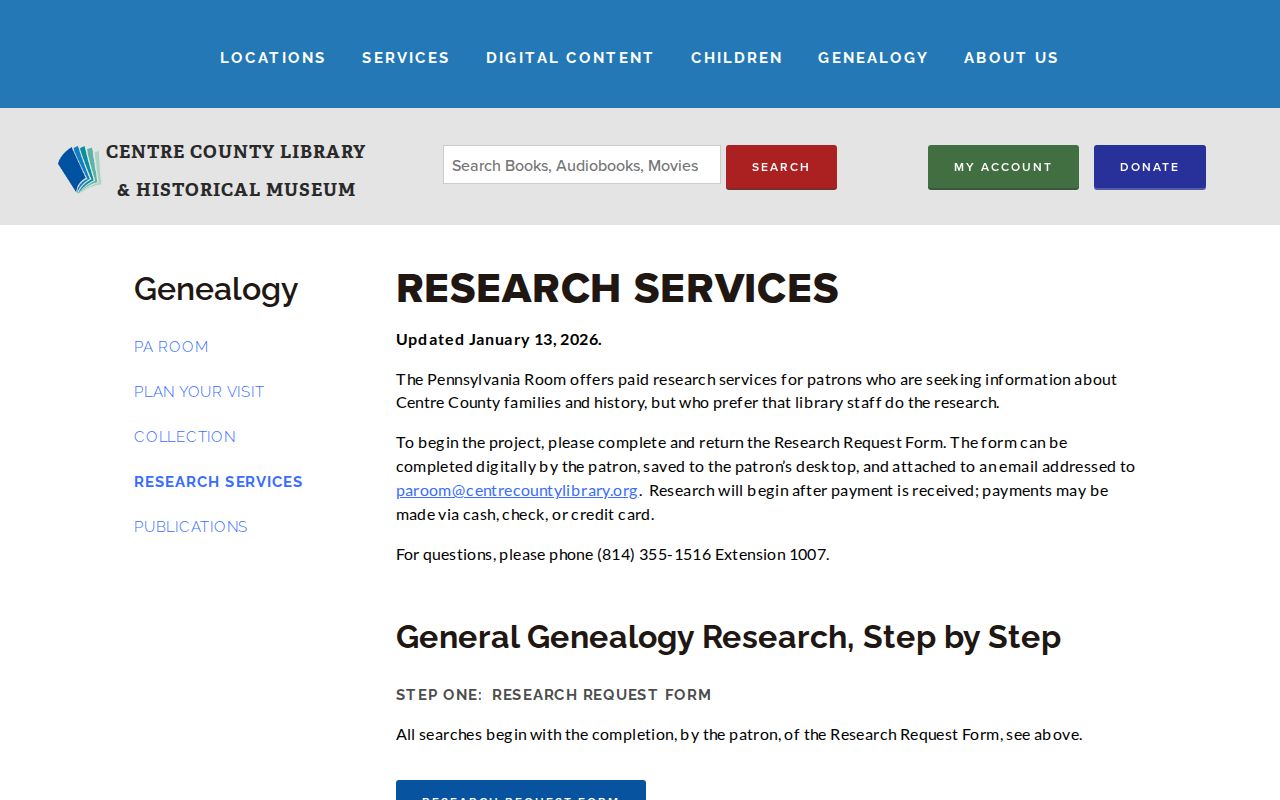
Staff help can direct a search toward the right shelf, card file, newspaper run, or original record without turning a historical reference into a current directory.
State College City Directory Catalogue Checks
Before transcribing a State College city directory, verify the volume itself. The research found no authoritative proof of a local publisher run, a first or last publication year, or a reverse or criss-cross series. The Pennsylvania Room inventory and the State Library of Pennsylvania's print and microfilm directory collections are the appropriate discovery paths. The Pennsylvania historic-property research guide also points researchers to local libraries, historical societies, yearbooks, and digitized repositories as leads, not as a guarantee for a particular Borough title.
Record the full printed title, edition date, places named in its scope, and every section heading. If a volume has a street-order section, note that from the volume. If it does not, do not call it a criss-cross directory. A city directory might list a person, a business, a rural route, or only selected heads of household. Its absence can reflect timing, a spelling variant, or the book's intended coverage.
State College City Directory Entry Reading
A local example is available through a Penn State research page that quotes Anderson's Directory and Reference Guide of Bellefonte, State College, Howard and Milesburg Penna.: Including Rural Delivery Routes: 1911-12. The quoted store listing uses 12 and 14 South Allegheny Street in Bellefonte. It proves the kind of detail that should be preserved from a printed directory, but it is not a State College household sample and it does not establish a Borough-wide run.
| Title and edition | Copy the displayed title and year range exactly. |
|---|---|
| Geographic scope | List every town and rural-route area named by the volume. |
| Name or entity | Keep spelling and punctuation as printed. |
| Street address | Preserve number, directional word, street name, and street type. |
| Listed activity or relationship | Mark whether the line refers to a residence, a business location, or both. |
| Verification | Compare it with a tax, deed, map, notice, census, or probate source. |
The Penn State local directory example preserves the 1911-12 quotation used for this State College city directory inventory.
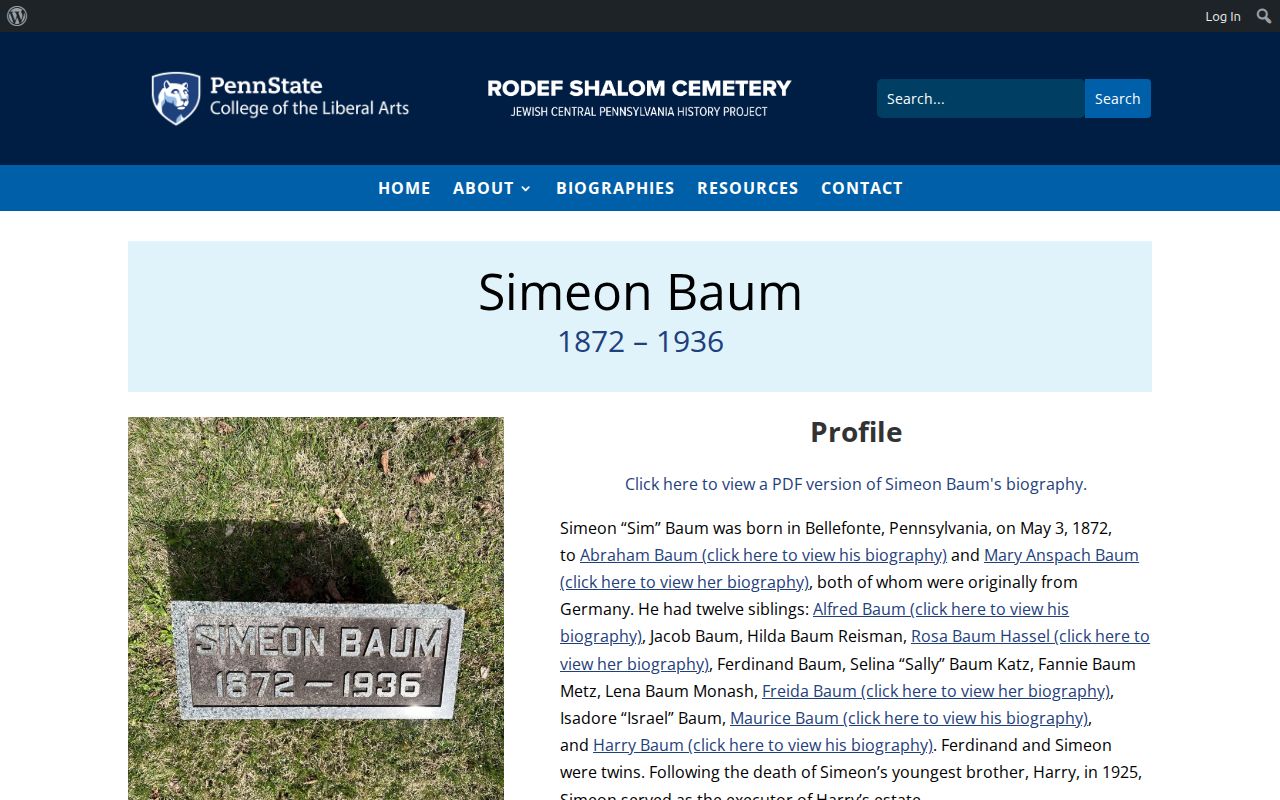
Its multi-town scope is the reason a street number or named entity must be read together with the title page and locality label.
State College City Directory Terms
Historical volumes use compact labels, and the labels may change from one title to another. A plain transcription should preserve the book's own notation while a separate note explains how it was interpreted. The terms below describe common directory concepts without asserting that a particular State College volume includes them.
- Criss-cross directory
- A directory arranged by street address rather than by a person's name. Confirm that a particular volume has one before using the term.
- Householder index
- An index arranged around the named household contact. It may omit other people connected to the address.
- Abbreviation key
- The publisher's explanation of shortened labels and symbols, often printed near the front of a volume.
- Rural delivery route
- A postal delivery description that may not match a modern municipal street address.
A directory line may be useful for family-history work even when it does not resolve a full address. It should be dated, cited, and paired with another State College record before drawing a conclusion about a household.
Tracing State College City Directory Households
Follow one name or address through a sequence of real sources, not through assumed annual books. A good household trail begins with the earliest verified printed or index entry, then checks whether a local map, tax record, deed, census, notice, or estate file agrees with the time and place. Federal population schedules are released on a 72-year schedule. Penn State has already paired 1920 and 1930 census data with 1922 and 1929 Sanborn bases for a local historical layer.
- Search the Pennsylvania Room catalogue or onsite inventory for the actual directory, telephone book, yearbook, or local publication.
- Transcribe the title, edition, locality scope, spelling, address form, and any printed abbreviation.
- Check the same year against Pennsylvania Room tax records, which span 1801 through 1965, or a Recorder document where the property connection is known.
- Match the date to an available federal census and compare names, address forms, and household context rather than assuming a match.
- Use the obituary index, estate files, cemetery series, or marriage material to extend or close a family-history lead.
For a modern name needing a separate confirmation, use the official-record approach on the State College resident lookup page. That is a different task from interpreting a historical city directory line.
State College City Directory Map Checks
State College has an unusually practical address-history layer. Penn State's searchable Sanborn project covers 1906, 1911, 1922, and 1929. A researcher can search an address, building name, or land-use code, select a result, and inspect the building context. About 4,000 buildings were manually extracted for the project. These maps help test whether an address or structure fits a directory year, but they do not identify every person who was there.
For property corroboration, the Pennsylvania Room holds tax assessment records from 1801 through 1965, while the Centre County Recorder says public document records begin in 1800. A UPI, or parcel identifier, and a legal description are sturdier bridges than a street number when the address form changes. County historical records are also routed through Centre County Records Management to the Pennsylvania Room for many older originals.
The Centre County Records Management page is the source for this historical-record handoff.
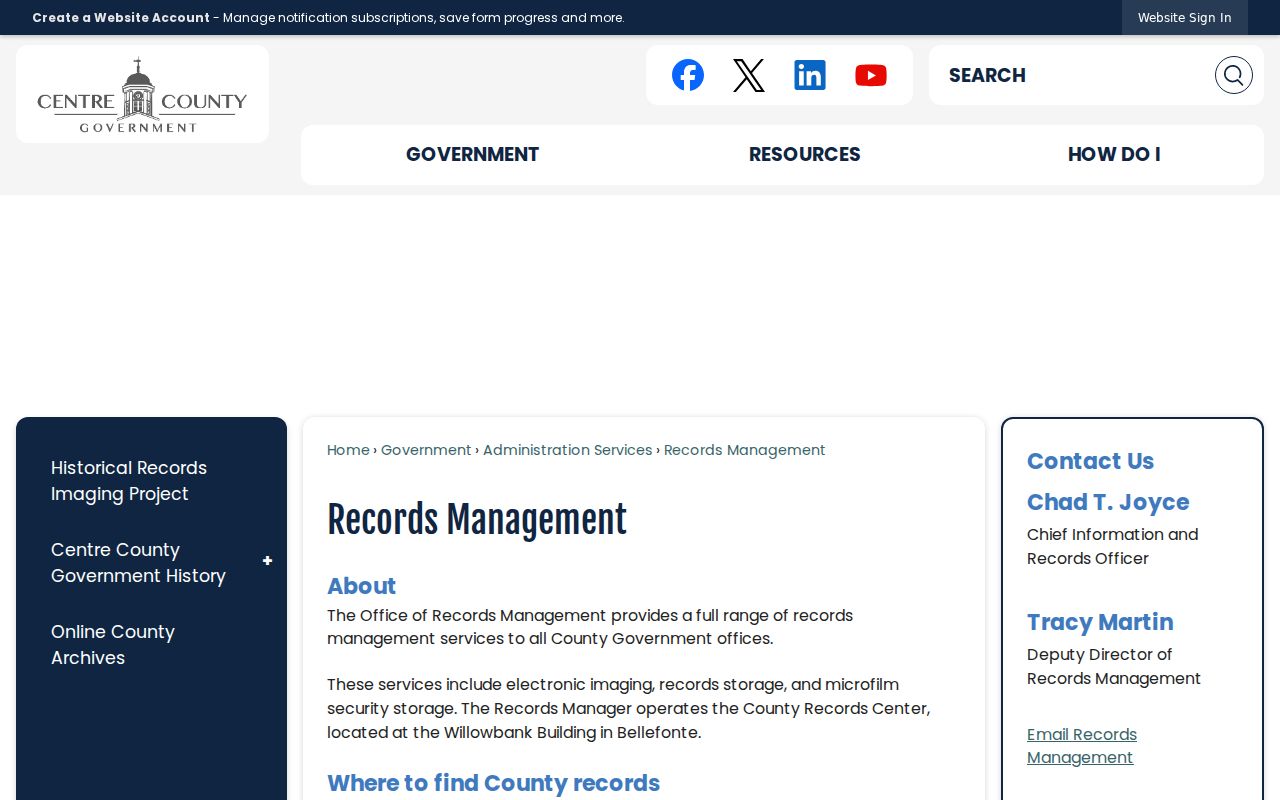
That handoff explains why an early State College-area question may require a library and museum desk instead of a current county interface.
State College City Directory 1890 Substitute
The loss of most original 1890 federal census schedules is a real research break. Before that loss, a Centre County business and post-office directory was compiled. The Pennsylvania Room's reprint alphabetizes borough and township household heads and includes a surname index. It reports 43,190 county residents and 2,800 family names. The item is a county-level substitute, not proof that every State College household appears in a municipal street directory.
| 1800 | Centre County public document records begin at the Recorder. |
|---|---|
| 1875 | The college-area community took the State College name after the institution's name change. |
| 1890 | The county business and post-office reconstruction supplies a surname-indexed alternative to lost census schedules. |
| 1896 | State College incorporated as a borough, so earlier references may use township, road, lot, or college-area descriptions. |
Do not transfer the federal census loss to Centre County deeds or court books. Research found no authority supporting a claim that a courthouse fire destroyed those county record series.
State College City Directory Family Sources
The Pennsylvania Room's Spangler Collection gives a second route for hard family names: 250,000 manually searched surname cards, inscriptions from 113 Centre County cemeteries, church and family material, tax lists, and selected obituary and marriage records. The J. Marvin Lee collection adds indexed family group sheets, documentation, and correspondence. These are onsite research tools, not a public resident roll.
A major access change followed the 2023 to February 2025 FamilySearch project. The library reported completion of digitization for 15,840 estate containers, plus marriage books and applications from 1885 through 1990. The material is searchable through FamilySearch full-text indexing, while the primary record should still be cited and reviewed. Those estate and notice sources can help explain a move, name change, or property transfer found beside a city directory entry.
The library's digitization report documents the estate and marriage-book work.
This local digitization expands a family-history trail, while the printed directory and its date remain separate pieces of evidence.