
Finding State College Borough Residents
State College Borough has no single public roll that proves who lives at every address. Centre County assessment records can identify a tax owner of record. Recorder documents can connect a parcel to grantors, grantees, and dates. The Pennsylvania Room can connect a past name or address to indexed obituaries, estate files, tax records, and local publications. Each source answers a narrower question. A property record does not list every household member, and a deed party may be an owner, trustee, lender, or seller rather than a present resident.
Start with the most solid fact already available, such as a street address, a full name with a middle initial, or a year tied to an old address. Preserve spelling variants and the mailing place shown in the original record. State College Borough includes part of Penn State's campus, so University Park can appear as a mailing designation for a borough address. That makes the street, municipality, parcel key, and record date more useful than a name match alone.
- Normalize the address, including directional, street suffix, ZIP, and municipal name.
- Use the County parcel map for location context, then use the Assessment terminal or designated subscription route for a current tax-record question.
- Carry the parcel's UPI, or Uniform Parcel Identifier, into the Recorder's document trail.
- For an earlier household, check the Pennsylvania Room's original tax, estate, obituary, and map resources.
- When no online record answers the request, ask the actual custodian for a defined document and date range.
Note: A current record and an older historical source should be kept separate until their address, date, and identity details agree.
State College Borough Record Offices
State College Borough supplies local planning, public-works, police-administration, and open-records material. The main ownership, deed, marriage, estate, assessment, election, and court routes sit with Centre County in Bellefonte. That split matters when a State College Borough residents directory search begins with an address. Borough maps can standardize a place, but the assessment and Recorder trail supplies the county property record. The borough's Right-to-Know channel is best used for a defined public record, not a request to create a new list of residents.
Centre County Recorder of Deeds
414 Holmes Street, Suite 1
Bellefonte, PA 16823
814-355-6801
Centre County Tax Assessment
420 Holmes Street, Suite 301
Bellefonte, PA 16823
814-355-6721
Centre County Elections
502 East Howard Street
Bellefonte, PA 16823
814-355-6703
State College Borough Assessment Change
Centre County identifies DataScout as the current assessment route and keeps public assessment records available on lobby terminals. Its legacy WebIA notice says assessment information stopped receiving updates there on August 1, 2025 during a county conversion. Treat a WebIA assessment hit as dated research. For a present property question, use the current designated system or the terminal, then compare the parcel and recording information with the Recorder record.
The public Assessment description confirms the kinds of information it maintains: tax roll, parcel and mapping work, values, property characteristics, and ownership updates derived from recorded documents. It does not publish a static field list for the current vendor form. That is why a careful State College Borough residents directory search names the source and date rather than claiming a field was visible when it was not.
State College Borough Parcel Map Limits
The free Centre County Public Parcel Viewer is a strong starting layer for State College Borough records. It shows parcel context and published layers such as flood, soils, school districts, and public land. It deliberately does not display ownership. That boundary is useful: use the free map to place a parcel, then use Assessment access for the tax-record question and the Recorder for the document chain. A map pin alone does not identify a resident.
| Record layer | Best question | Access route | Key boundary |
|---|---|---|---|
| Public Parcel Viewer | Where is the parcel? | Free County map | No ownership data |
| Tax Assessment | What is the tax-owner and parcel context? | DataScout or lobby terminal | Not a household roster |
| Recorder documents | Who transferred the property, and when? | WEBIA or office inspection | Document party is not a resident claim |
| Borough planning file | What project was proposed at the address? | Planning, CRCA, or a focused request | Project paper is not occupancy proof |
For a complete address-by-address sequence, the State College Borough street directory follows the parcel, UPI, and deed trail in more detail.
Current State College Borough Resident Sources
Current sources do not all mean the same thing. Assessment material speaks to tax and parcel administration. Recorder documents show people or entities in a recorded transaction. The election office manages voter records under specific state rules. Court dockets, professional credentials, and business filings may help verify a limited question, but they are not broad State College Borough resident lists. Match the source to the fact being tested.
| Source | What it can support | Keeper | Access and limit |
|---|---|---|---|
| Assessment / parcel record | Tax-owner and UPI context | Centre County Tax Assessment | Lobby terminal or subscription route; not every occupant |
| Deed index | Transfer parties and property history | Recorder of Deeds | Office inspection from 1800; paid WEBIA remotely |
| Public court docket | Visible docket association and status | Pennsylvania UJS | Free public search; exclusions apply |
| Election record request | Regulated election information | Centre County Elections | Written use limits and no Internet publication |
| Historical local indexes | Past death, estate, marriage, tax, or map lead | Pennsylvania Room | Mostly onsite or staff-research access |
Access also changes by source. The County's free parcel viewer gives location context without ownership. Remote WEBIA access is subscription based, and the current assessment system is a separate route. Pennsylvania Room original records are largely onsite, although its staff-research service can begin with a preliminary request. Use the access channel that the record keeper documents, rather than assuming a public portal has the complete file.
State College Borough Election Records
Pennsylvania's Voter Registration Status tool is for a person checking their own registration and polling information. Centre County also has a voter-information request process for defined reports. Its form distinguishes countywide lists, Street Lists, Walking Lists, and special requests. The request requires identification and an affirmation. State law limits these records to election, political-activity, or law-enforcement uses and bars Internet publication. A public election record is not an invitation to assemble a general resident database.
The Centre County Elections and Voter Registration office maintains local election information and routes for voter questions.
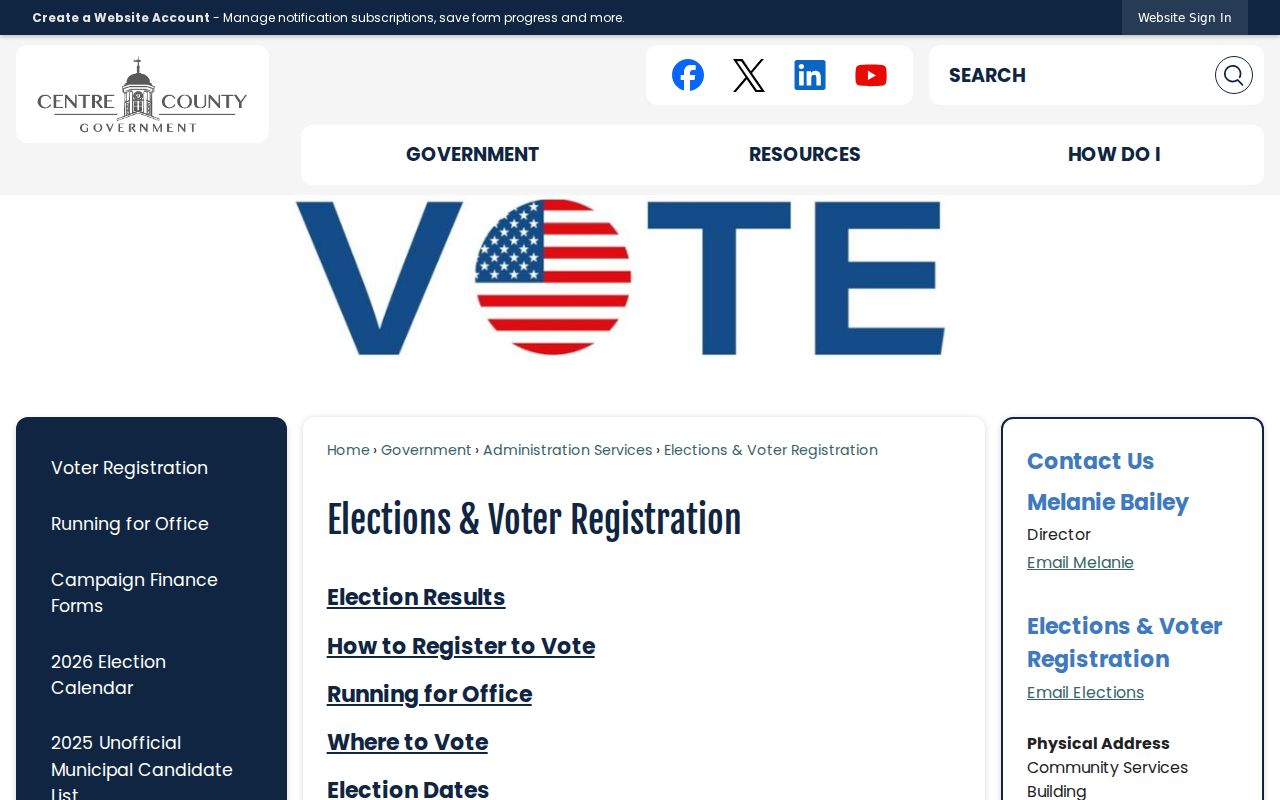
Election geography can identify a precinct and district, but it does not establish who lives at every surrounding address.
State College Borough Court Name Checks
The free Pennsylvania UJS Case Search is the practical public docket route for a Centre County name or case identifier. Its advanced choices can narrow by county, court office, participant name, date of birth, date filed, docket number, parcel address, municipality, and ZIP. Use a full name with a neutral second detail such as Centre County or a date range. A same-name hit is not enough.
UJS warns that juvenile, expunged, limited-access, and some civil material will not display. Recent entries can also lag, and some disposed magisterial electronic records are removed under the retention schedule. Contact the relevant court office for a full paper record or certified copy. A docket filing address may be a service or mailing address, not a current State College Borough residence.
| Participant fields | Last name, first name, date of birth, role, organization, or attorney, depending on mode |
|---|---|
| Case fields | Docket, citation, complaint, OTN, SID, and filing-date options |
| Place fields | County, judicial district, MDJS office, parcel address, city, state, ZIP, and municipality |
| Result limit | Public docket information is not the complete official file |
State College Borough ZIP Geography
ZIP codes route mail. They do not draw borough boundaries. The important local exception is 16802: Penn State documentation places 425 Allen Road in University Park, PA 16802 while the project is physically inside State College Borough. The 16801 and 16803 postal labels also extend beyond a single municipal boundary. Preserve the printed mailing place, but verify borough jurisdiction using the street address, parcel municipality, and County or Borough map.
- UPI
- The county parcel key that ties assessment and recorded-deed work together.
- Situs address
- The physical location of the land or building.
- Mailing address
- A correspondence destination that may differ from the situs address.
- ZIP Code
- A USPS delivery designation, not proof of municipal jurisdiction or present occupancy.
Note: The USPS ZIP Lookup can verify an address-to-ZIP pairing, but USPS says its result does not prove a person or organization is at the address.
State College Borough Historical Sources
The Pennsylvania Room at Centre County Library & Historical Museum is the local historical-records anchor. Its collection includes original county tax assessment records from 1801 to 1965, estate files from 1800 to 1990, road petitions from 1800 to 1956, marriage applications from 1885 to 1990, and an obituary and death-notice index from 1821 to 2021. The materials are noncirculating and generally used onsite in Bellefonte. A research-request service begins with a no-cost preliminary review, then quotes deeper work when the collection supports it.
Historic work can also use Penn State's searchable 1906, 1911, 1922, and 1929 Sanborn maps to compare a structure's physical context through time. Those maps help reconcile a past address, building use, or road description. They do not establish every person who lived there. The State College Borough directory book focuses on the local shelf, its catalog checks, and a sound way to transcribe historical entries.
Historic State College Borough Resident Trails
Historic directory research should begin with the actual catalogue entry and the item in hand. The research found no authoritative public catalogue that establishes a complete State College directory publisher list, an exact run of years, or a reverse-directory series. Do not fill that gap with a guessed publisher. The Pennsylvania Room, the State Library of Pennsylvania, and local historical collections are the right discovery routes. Once a volume is located, record its title, edition, geographic scope, abbreviations, and whether an entry identifies a residence, a business, or both.
A local example illustrates the care needed. A Penn State research page quotes Anderson's Directory and Reference Guide of Bellefonte, State College, Howard and Milesburg Penna., including rural delivery routes, for 1911-12. Its locality span reaches beyond the borough, and one line can refer to a workplace rather than a household. Compare the entry's exact spelling and year against a tax record, deed, obituary, census release, or map. That turns the State College Borough residents directory trail into evidence rather than an unsupported claim.
State College Borough Family-History Endpoints
Estate files and notices can close an older property or family trail. The Pennsylvania Room indexes obituaries and death notices through 2021 and preserves estate material through 1990. Its Spangler Collection adds 250,000 manually searched surname cards, church and Bible material, obituaries, marriage records, and inscriptions for 113 Centre County cemeteries. These are research leads, not a promise that each name appears online or that one finding proves a full relationship.
CCLHM reported that a FamilySearch-supported project completed digitization of 15,840 estate containers in February 2025 and also digitized marriage books and applications from 1885 through 1990. Full-text indexing can help locate a document, but the original record citation remains important. A digitized estate may identify an executor or heir, while the Recorder and tax records supply the property connection.
State College Borough Safety Records
Current custody and public-safety systems have narrow scopes. The PA DOC locator covers state-sentenced people and people under Department supervision, not County facilities, other states, or federal custody. Use a last name or inmate number first, then add a first name for a common surname. The result is time-sensitive and is not a general identity history.
The Pennsylvania DOC locator publishes a current-status route for the limited population it covers.
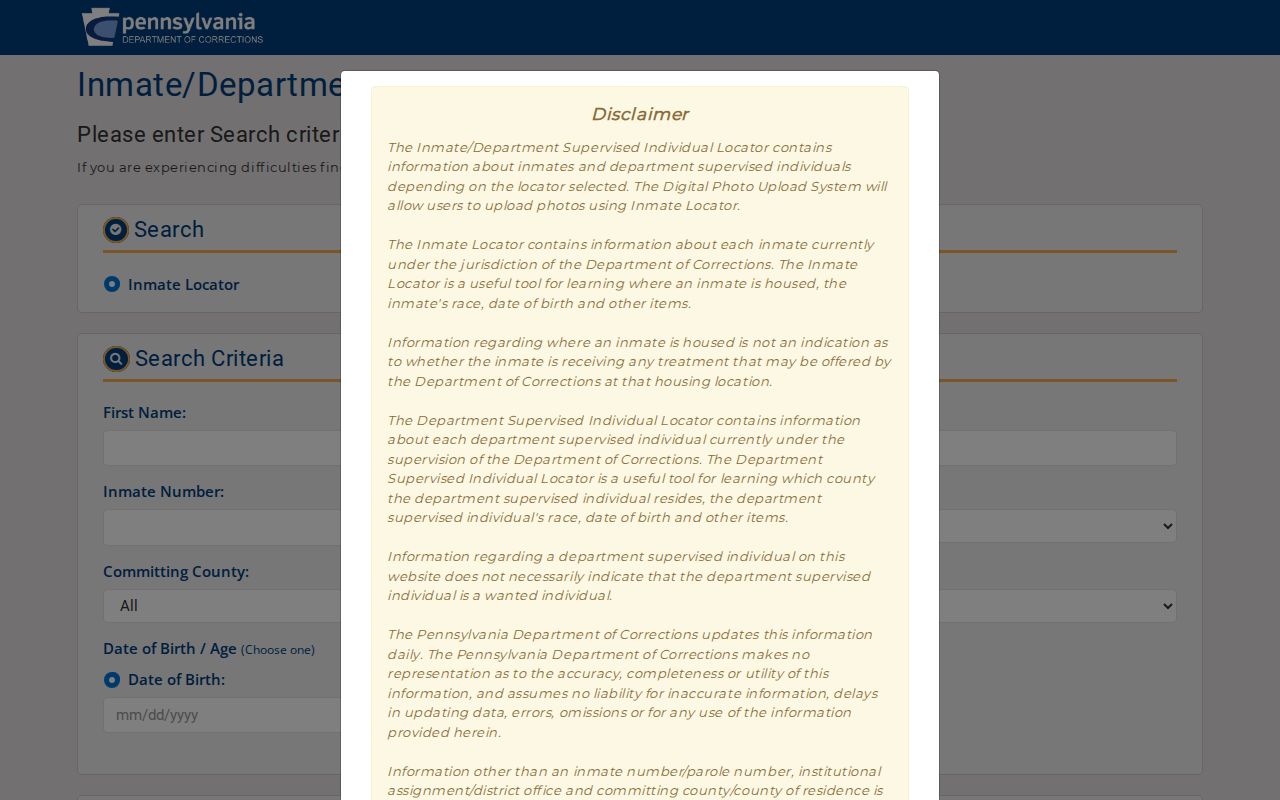
For County facility status, Centre County directs a specific inquiry to VINELink or its listed jail contact rather than a broad resident search.
The Pennsylvania Megan's Law registry is available solely for public protection and carries its own accuracy and misuse warnings.
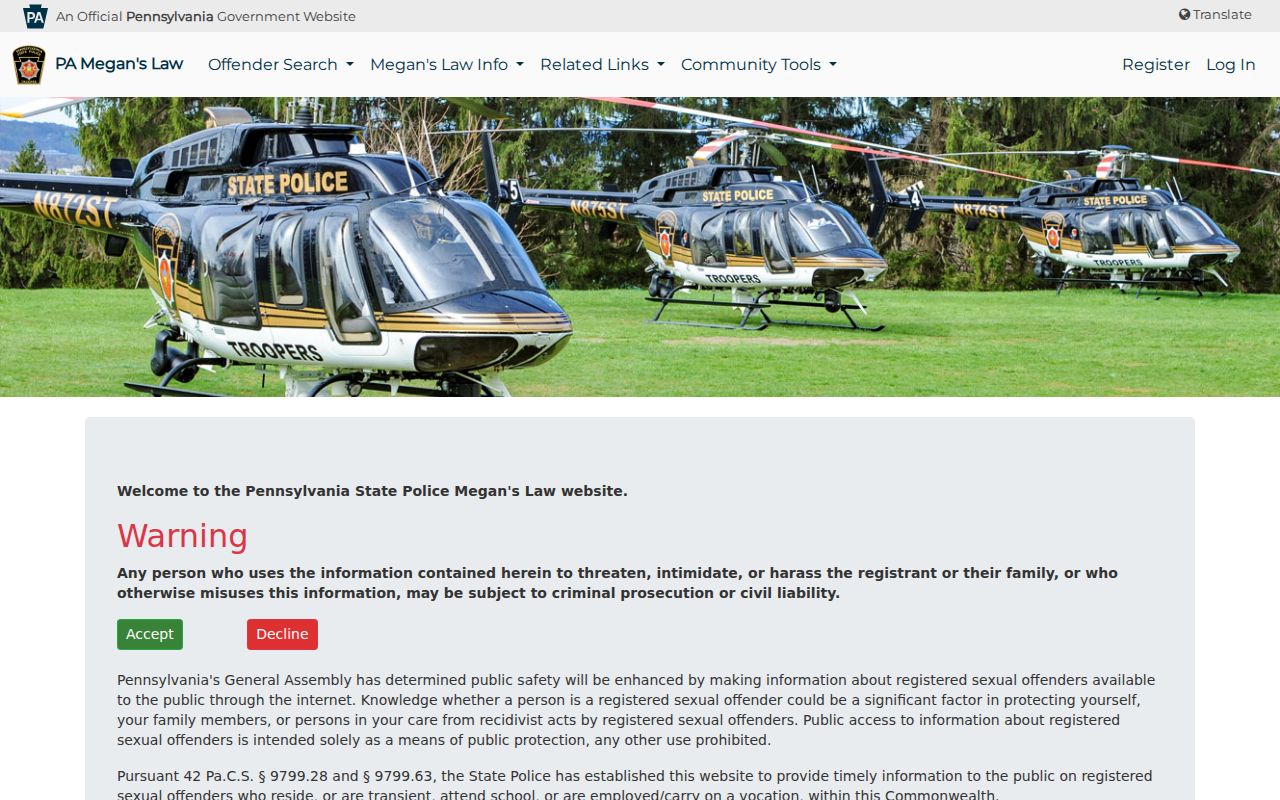
Do not use registry information to threaten, intimidate, harass, or harm anyone. The state warns that registry information can be incomplete or outdated.
State College Borough Records Requests
When a public local record is not online, the best request names the address, date range, record type, and office likely to hold it. State College Borough's Right-to-Know procedure accepts its request form by email, fax, or mail to the Right-to-Know Officer. Public inspection and duplication hours are Monday through Friday, 8 a.m. to 5 p.m., excluding holidays. A request can seek an existing releasable planning, public-works, administrative, or police-administration record. It cannot require the borough to create a new compilation of residents.
The State College Borough open-records process also explains the officer routing and appeal path.
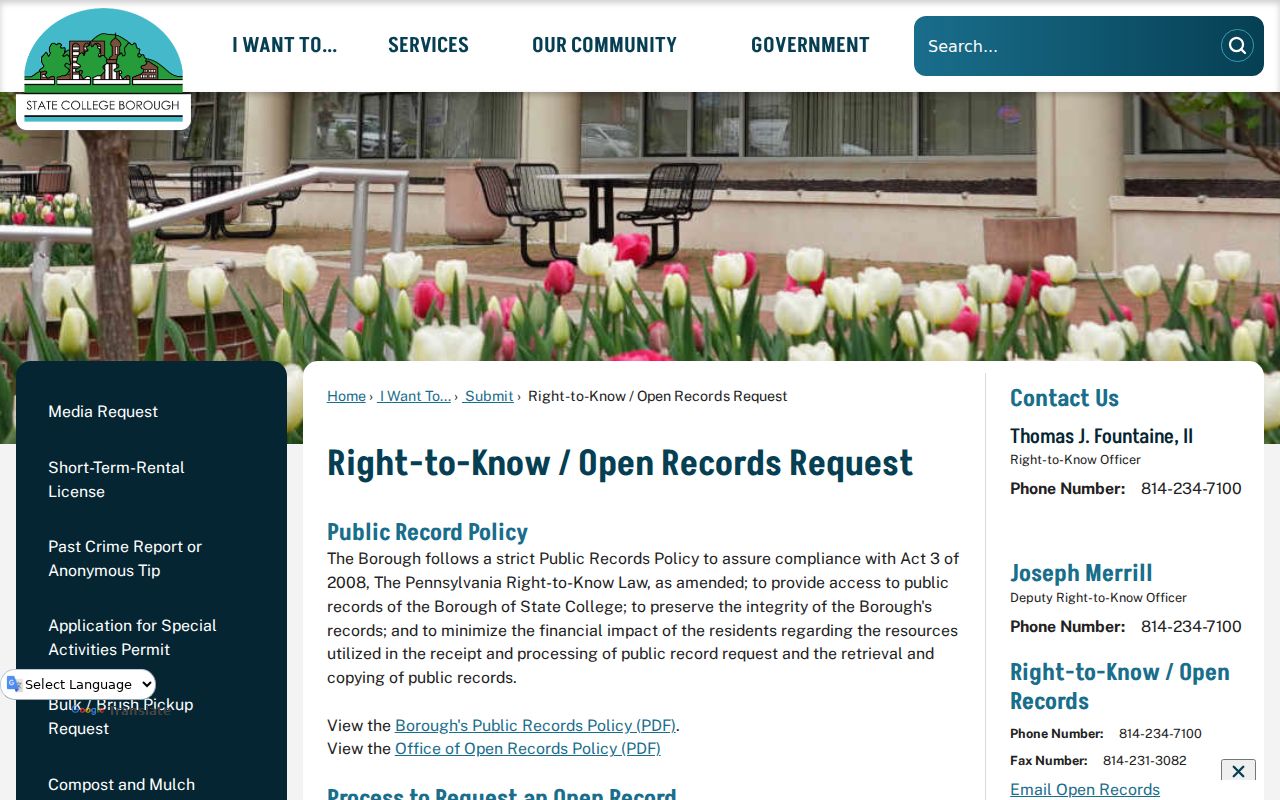
Pennsylvania's Right-to-Know Law gives agencies a general five-business-day response period, subject to lawful interim responses, fees, and exemptions.
State College Borough Scam Checks
A mailed offer for a deed copy is not automatically a government invoice. Centre County's Recorder information says a counter copy can be printed for $0.50 per page, while a mail request needs a self-addressed stamped envelope and a call to calculate the printing cost. Confirm the actual office route before paying an unfamiliar sender. The same habit applies to an unclaimed-property solicitation: search the official state resource before paying an intermediary simply to search.
The Pennsylvania Treasury unclaimed-property search is the official starting point for a name-based unclaimed-property question.
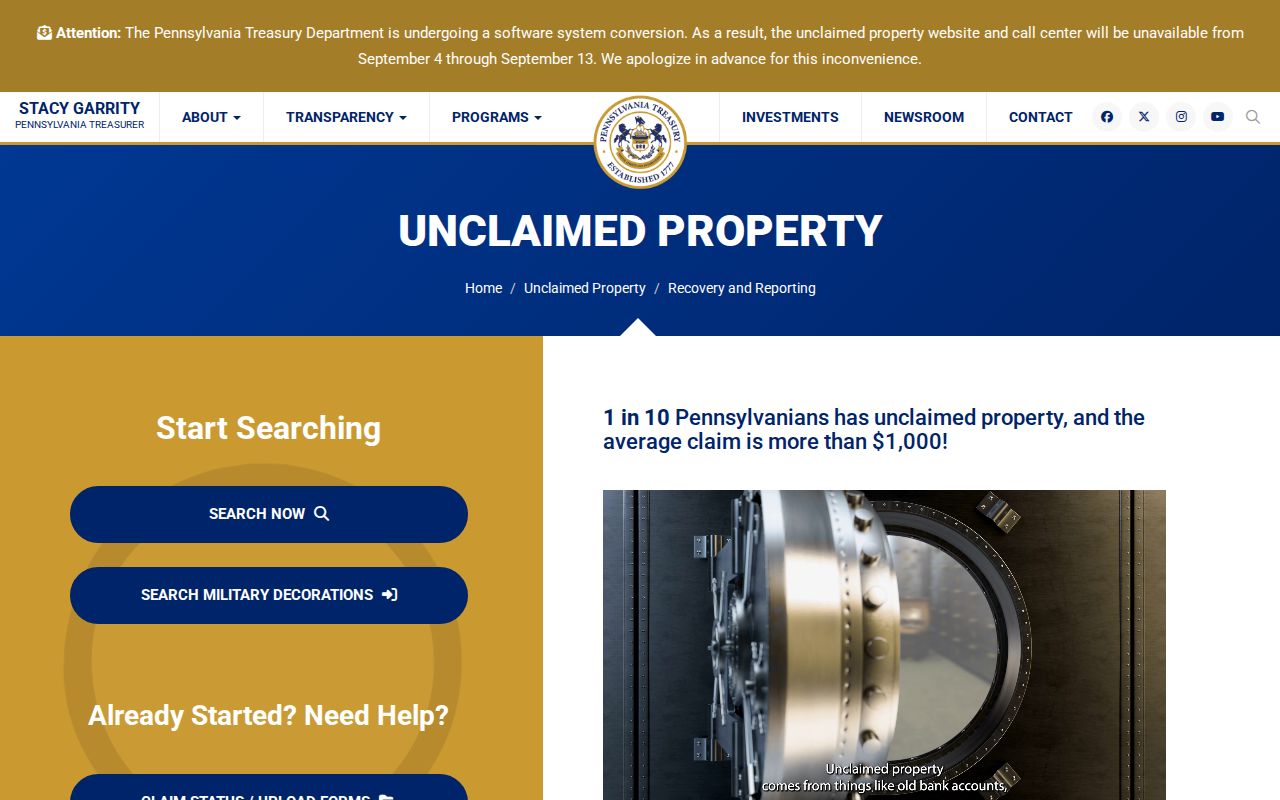
A result is a lead to verify with the named state agency, not proof of a present address or relationship.
Use records lawfully. State College Borough records support personal research, family history, civic questions, and source verification. Do not use any result to stalk, harass, intimidate, or harm a person.
State College Borough Match Checks
A reliable match uses independent records and preserves their limits. A name in a deed becomes more useful when the same legal description or UPI appears in a tax record. A directory line becomes more useful when its edition year agrees with a map, newspaper, estate, or released census record. A court docket needs the correct county and date. A mailing address is not a physical residence simply because it appears in a public file.
Keep a short research note with the source name, access date, record date, exact spelling, and unresolved conflict. State College Borough has unusually deep local material, but the responsible conclusion is often a qualified one: a document connects a person to a transaction, property, or historical address at a particular time.
Note: Contact the custodian when a primary record appears wrong, because each office has its own correction, copy, and confidentiality rules.